
How we provided transparent communication and reduced support requests by 30%
STON.fi is a decentralized cross-blockchain platform (DEX) and Automated Market Maker (AMM) natively built on the TON blockchain.




Challenge
Cut support load and negative feedback on transaction statuses with a redesigned flow and in-product education.
Results
The share of support tickets related to transaction statuses decreased by 30%
Context
The technical complexity of operations on the TON blockchain means users often wait several minutes for a transaction to execute — depending on the operation type. Anxious about losing their funds, they flood the support team with tickets. After the global release of STON.fi V2.0, user numbers spiked — and so did the support load.
User problems
- The processing modal blocks users from other app actions while their transaction is in flight.
- Users have no clear sense of whether their transaction is progressing or has failed — a critical pain point when execution takes several minutes. The result: negative reviews and a spike in support tickets.
Business problems
- High support load driven by user uncertainty around transaction status and execution time.
Processing modal
 Interesting fact
The Achilles' heel of blockchain
On the TON blockchain, transactions are processed asynchronously. Smart contracts communicate by passing messages — not synchronously within a single block as on Ethereum or Solana.
As a result, operations like liquidity provision and farming can take significantly longer than a simple peer-to-peer token transfer.
Hypotheses
- If we eliminate the processing modal, we'll reduce user frustration.
- If we implement clear transaction statuses, we will increase user awareness and reduce transaction status-related support requests.
UX challenges
- Design a comprehensive transaction status system aligned with backend logic.
- Redesign the transaction processing interaction pattern to align with the overall product.
- Deliver new components consistent with the product design system.
It all started with a matrix
Before jumping into wireframes, we map every transaction in the product — 64+ statuses, 16 operation types, and 3 distinct UI components. Everything needs a unified copy structure and logic aligned with the backend.
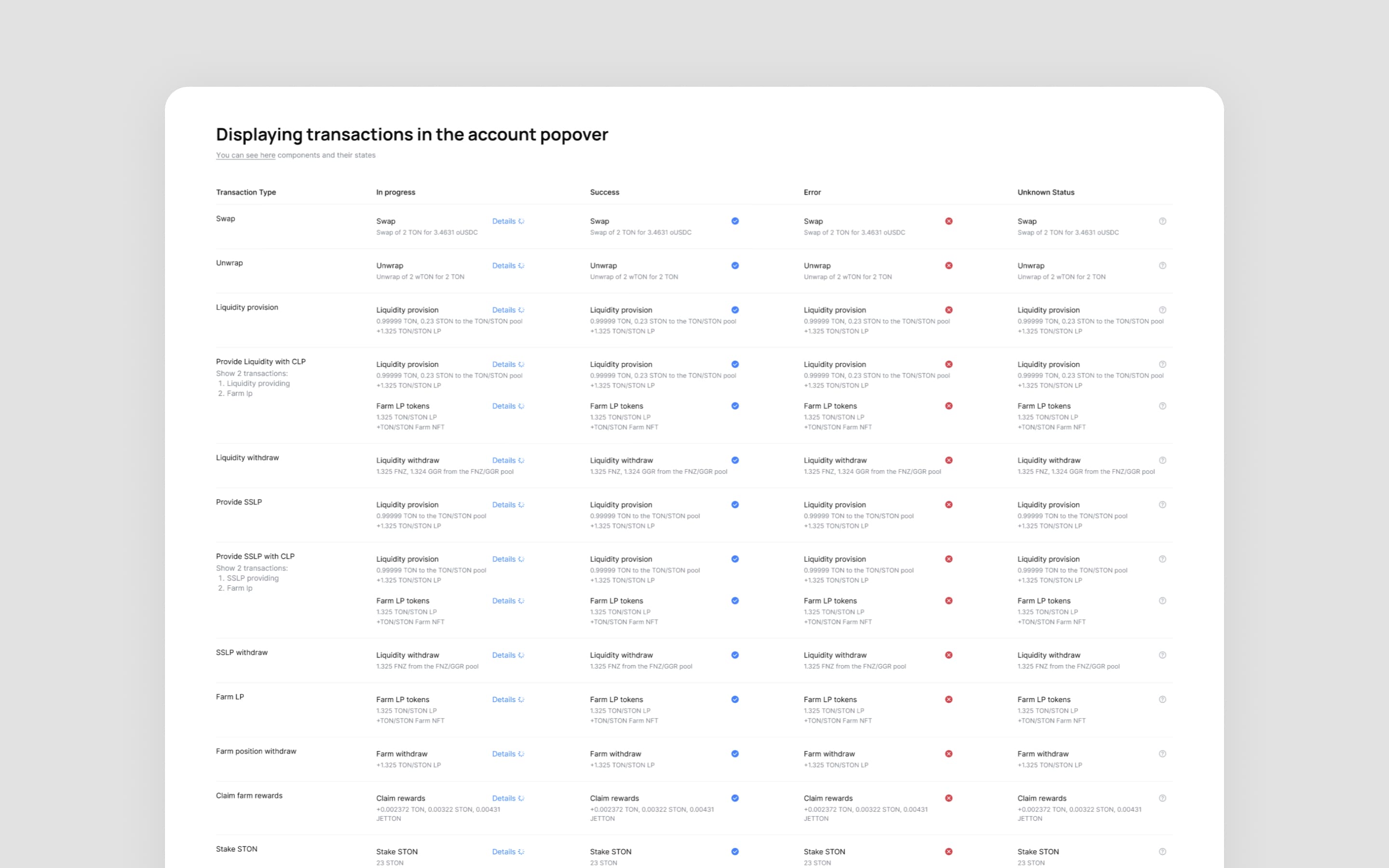
We define the status copy for every operation type on the client side.
Killing the modal — hello, snackbar
After syncing with engineering and signing off on the matrix, we move to the solution.
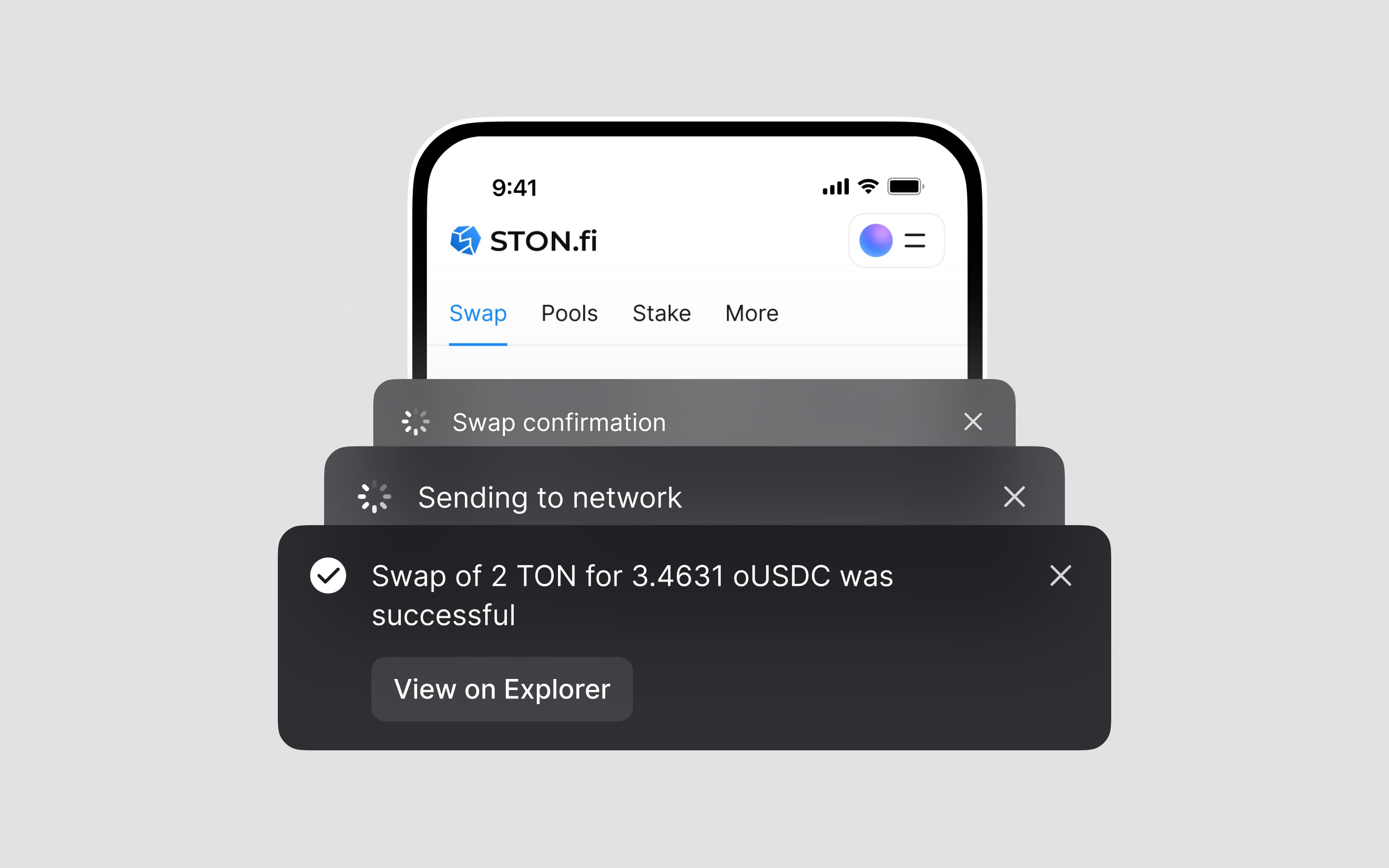
First decision: eliminate the persistent processing modal. Once a user confirms a transaction in their wallet, the modal collapses — a snackbar takes its place showing the live status. The full on-chain journey is accessible with a single tap.
This way, we stop blocking users with a modal overlay.
As an educational touchpoint, we introduce granular, clear transaction statuses — giving users the context they need to understand how the blockchain works.
Making all things clear
Reviewing the full user flow, we find that the confirmation screen and the status screen carry the same transaction data — but look completely different.
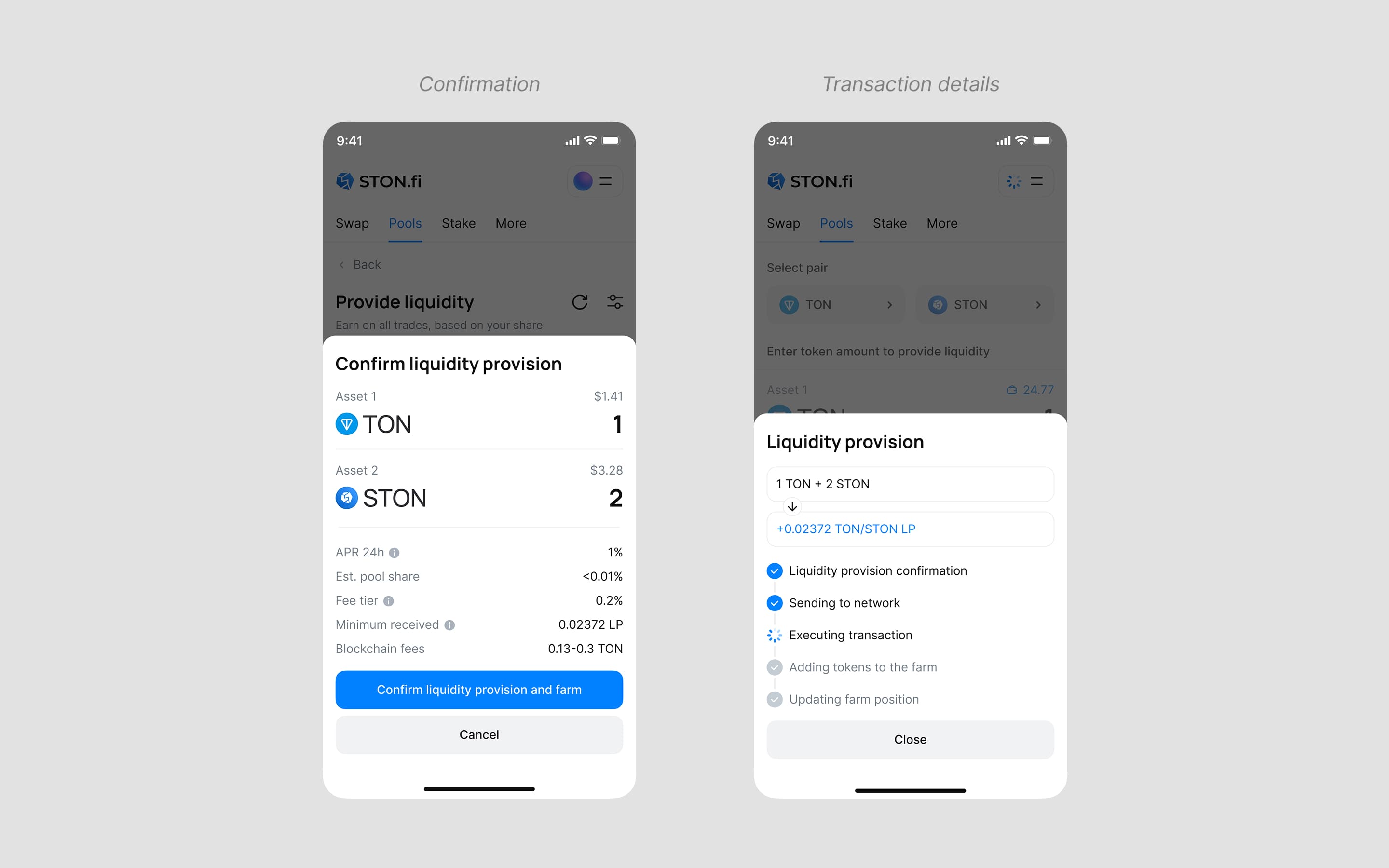
We unify the visual structure, standardize the layout, and introduce new components built to the design system spec.
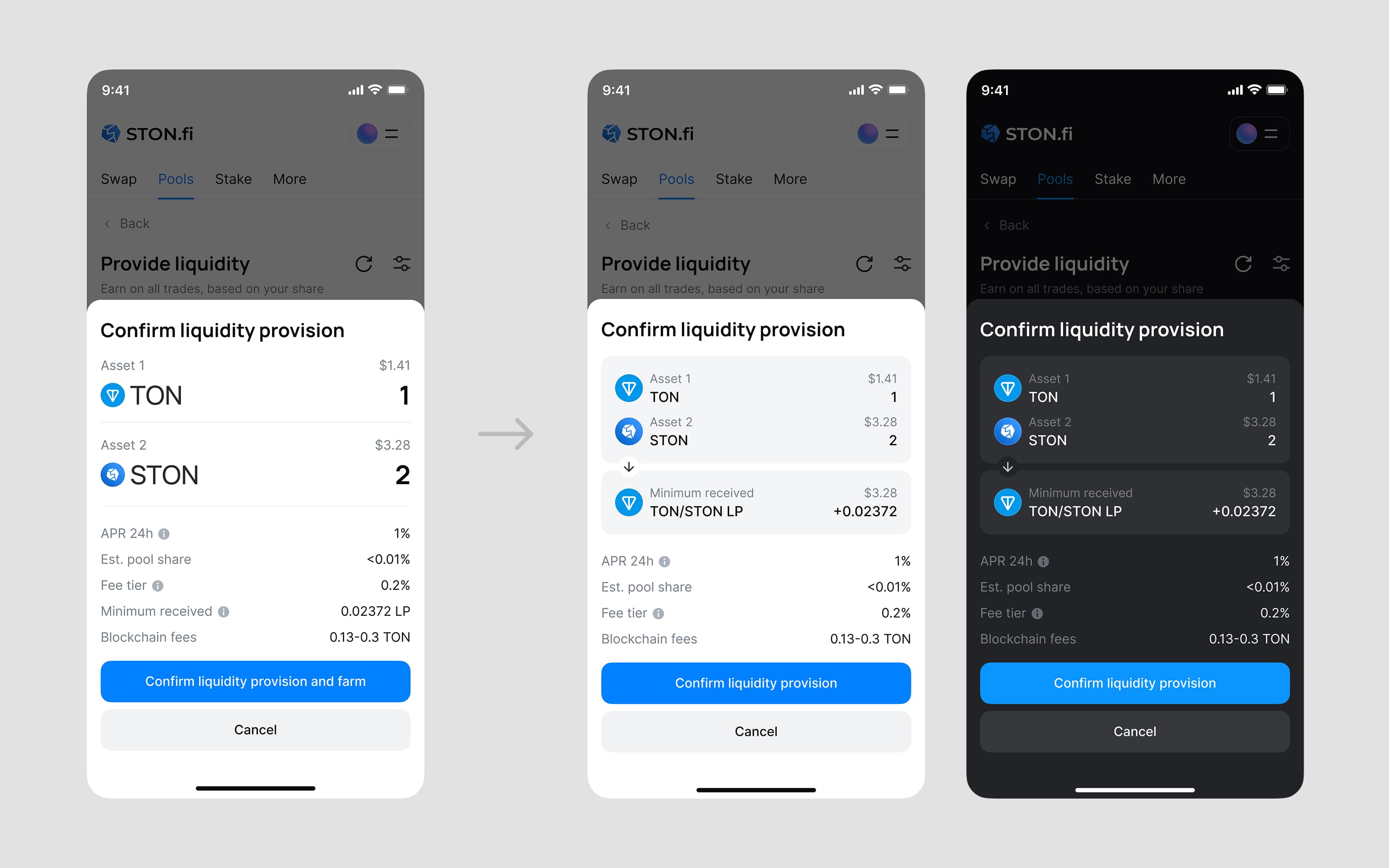
Confirmation modal refactoring
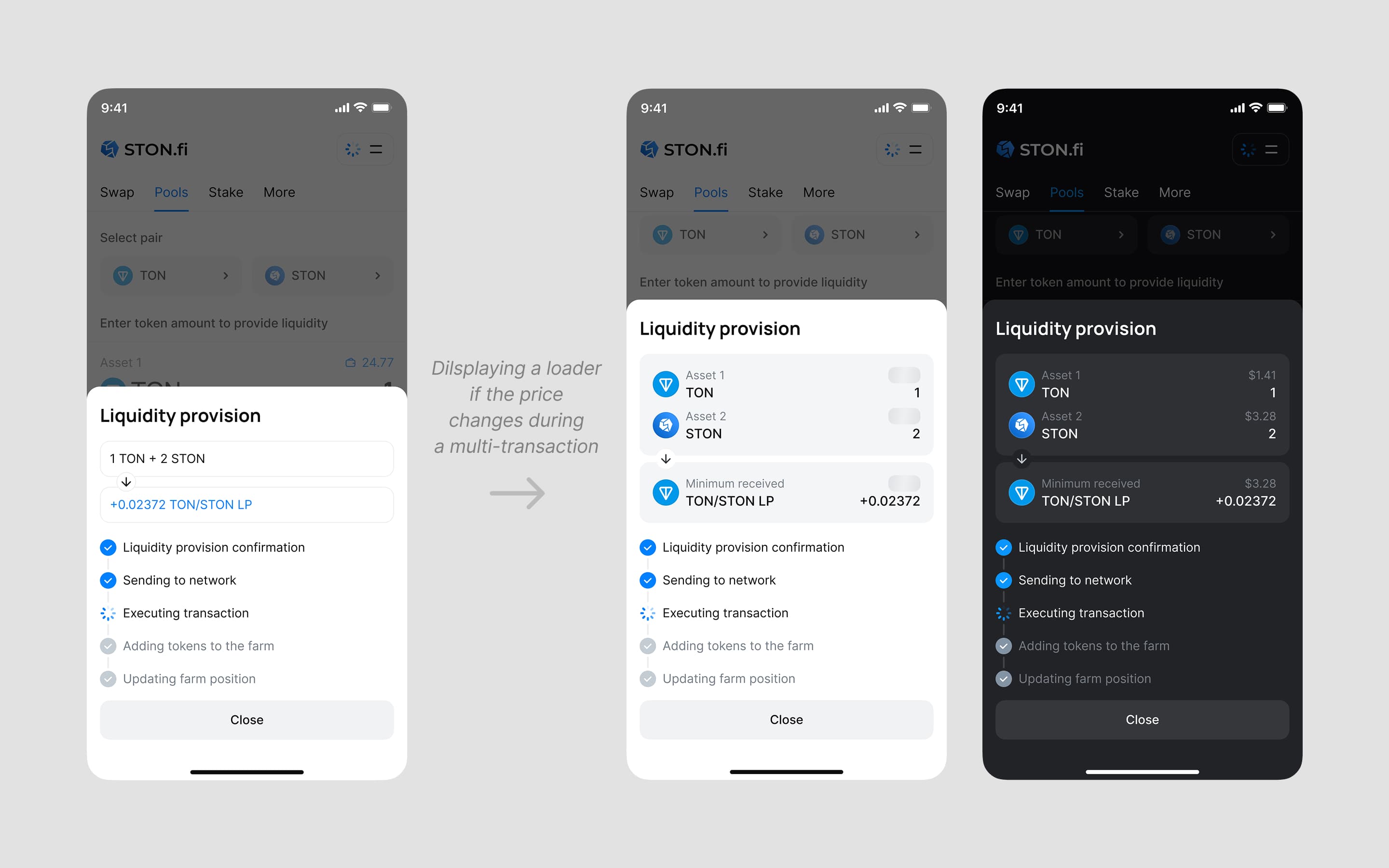
Transaction details modal refactoring
Final touch
We assemble the complete user flow — all components with variables and auto-layout, all edge cases and empty states, full specs. Alongside, I run all in-product copy through AI tools to check grammar and punctuation. Then we run a dedicated demo session for a smooth engineering handoff.
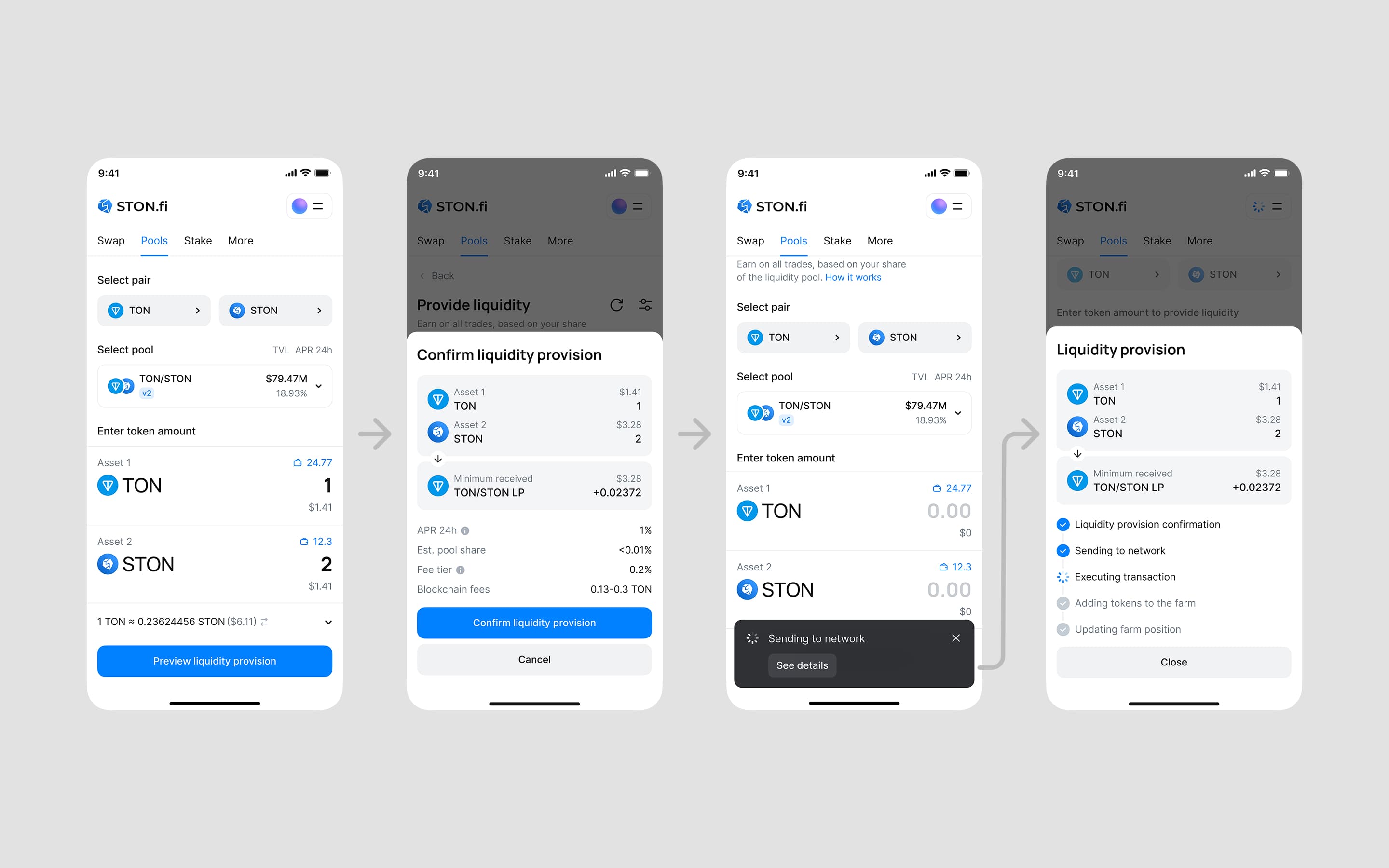
Basic flow
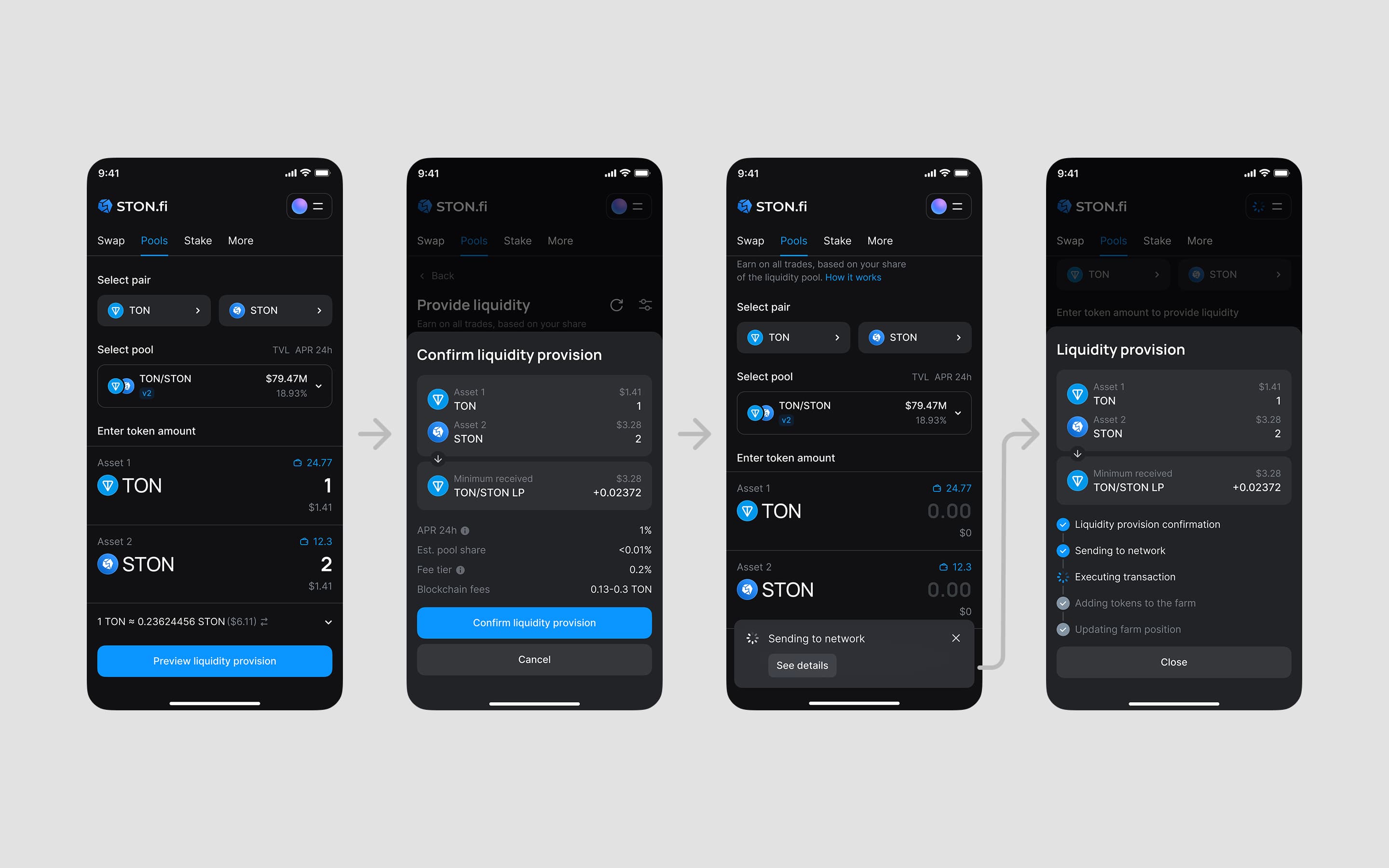
Basic flow – theming
Results
Between 50 and 65% of support tickets were related to transaction status uncertainty. After release, that category dropped by 30%.
Design, documentation, and implementation shipped in 7 days.
Other cases
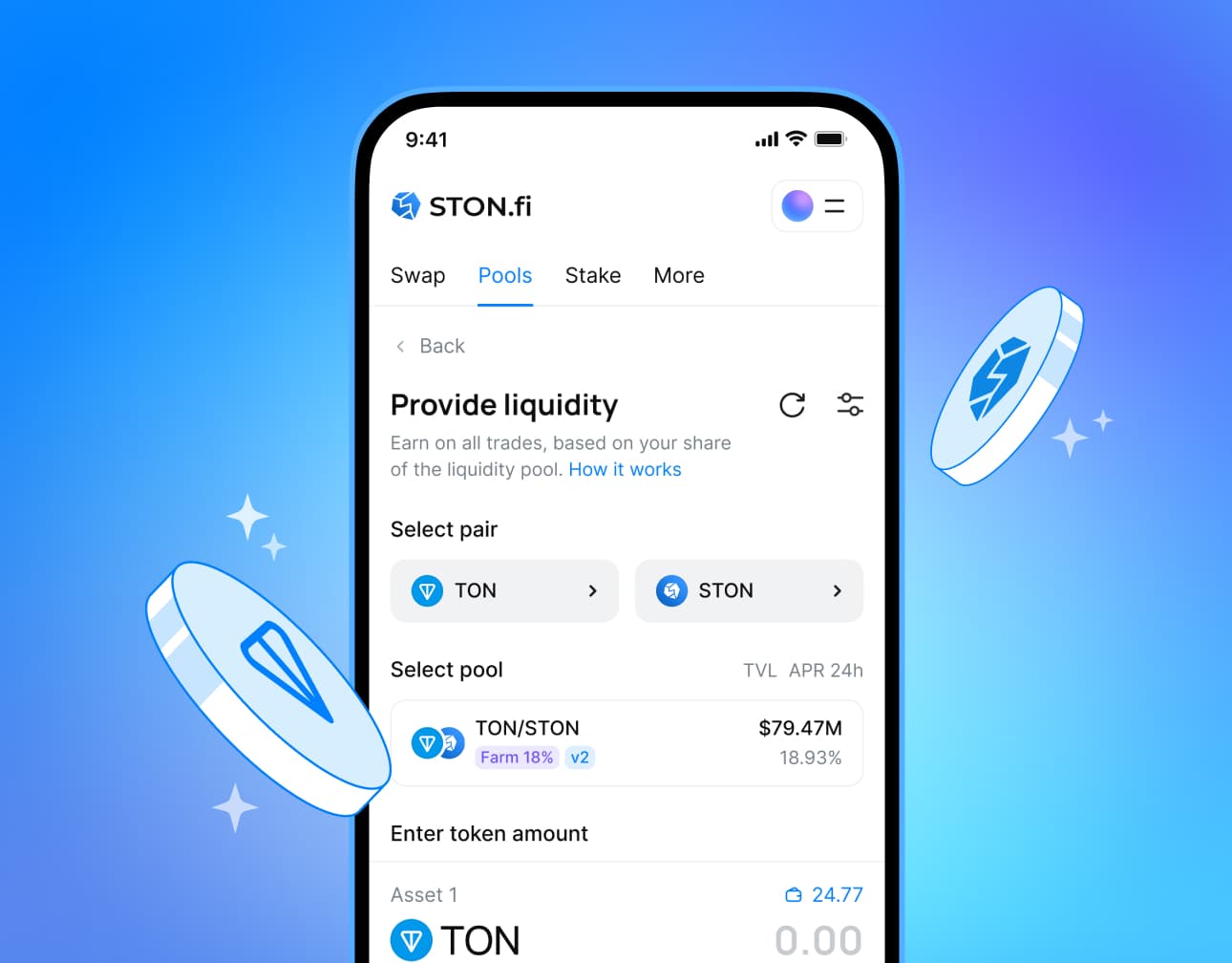
STON.fi V2.0 – Liquidity Provision Redesign
How we delivered the most complex protocol upgrade in the product’s history and became the #1 DEX on TON.
Product Design Lead,
2024
Evearn App redesign
How we came up with new concept and full app rebranding for couple weeks.
Senior Product Designer,
2025
